

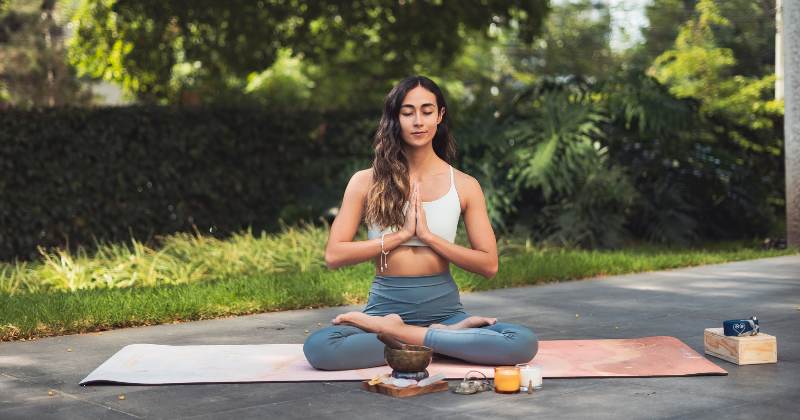
In our modern world, our minds are constantly “on.” We are bombarded by notifications, deadlines, social pressures, and a 24/7 news cycle. This relentless mental static can leave us feeling overwhelmed, anxious, and disconnected. We search for relief, often in complex or external solutions, while one of the most powerful tools for peace is already within us.
Meditation is not about “emptying your mind” or stopping thoughts; it’s a practice of training your awareness. It’s the simple, intentional act of sitting with yourself, observing your thoughts without judgment, and gently returning to an anchor, like your breath. The cumulative effect of this simple practice is transformative. This article will explore the proven benefits of meditation for mental health, from scientific to spiritual, and show you how to get started.
1. The Ultimate Stress Reducer: Calming Your Nervous System
This is the most well-known benefit, and for good reason. Our bodies are hard-wired with a “fight or flight” response (the sympathetic nervous system). When we perceive a threat—whether it’s a real danger or an angry email from our boss—our bodies flood with stress hormones like cortisol.
Meditation, particularly mindfulness meditation, acts as a direct antidote.
- Activates the “Rest and Digest” Response: The simple act of deep, conscious breathing activates the parasympathetic nervous system. This tells your body it is safe.
- Lowers Cortisol: Regular meditation has been shown to decrease blood cortisol levels, helping your body return to a state of calm more quickly and stay there longer.
- Reduces Physical Symptoms: This hormonal shift leads to a lower heart rate, reduced blood pressure, and decreased muscle tension—all physical manifestations of stress.
2. Finding Calm in Chaos: How to Reduce Anxiety with Meditation
Anxiety is often born from a mind that is living in the future—fixating on “what ifs” and worst-case scenarios. Meditation gently pulls your awareness back to the only moment that actually exists: the present.
This is a powerful way to reduce anxiety with meditation:
- Detaching from Anxious Thoughts: Meditation teaches you to become an observer of your thoughts, rather than a participant. You learn to see an anxious thought arise, acknowledge it (“Ah, there is that worry again”), and let it pass by like a cloud, without needing to follow it down a rabbit hole.
- Breaking the Rumination Cycle: By training your brain to return to the breath, you build the mental muscle to “unhook” from the repetitive, anxious thought loops that define an anxiety spiral.
- Increasing Amygdala Resilience: Studies have shown that meditation can, over time, reduce the reactivity of the amygdala—the brain’s “fear center.” This means you become less reactive to triggers that would normally send you into an anxious state.
3. Sharpening Your Focus: The Best of All Mental Clarity Tips
Is your brain constantly flitting between 10 different tabs and tasks? That “brain fog” isn’t a permanent state. Meditation is like a mental workout, a set of bicep curls for your prefrontal cortex (the part of your brain responsible for focus, decision-making, and attention).
- Strengthens Your “Attention Muscle”: Every time your mind wanders during meditation and you gently bring it back to your breath, you are completing one “rep.”
- Improves Concentration: This practice directly translates to your daily life. You’ll find yourself more able to stay on task, deeply engage in conversations, and absorb information.
- Enhances Memory: A less-distracted mind is a more efficient one. By filtering out the “noise,” meditation can lead to better working memory and retention.
4. Achieving Emotional Balance and Self-Awareness
One of the most profound benefits of meditation for mental health is the development of emotional intelligence and self-awareness. We often react to life on autopilot, an old emotional habit triggered by a person or event.
Meditation creates a “pause button” between a stimulus and your reaction. In that tiny space, you find your freedom.
- Identify Your Triggers: As you sit quietly, you begin to see your own patterns. You’ll notice how a specific memory makes your chest tighten, or how a certain thought leads to a feeling of sadness.
- Respond, Don’t React: With this awareness, you gain the power of choice. Instead of lashing out in anger, you can notice the anger, breathe into it, and choose a more constructive response.
- Cultivates Self-Compassion: Meditation isn’t about being perfect; it’s about being present. This practice naturally fosters a kinder, more compassionate relationship with yourself, which is the cornerstone of emotional health.
5. Which Practice is for You? Exploring Meditation Practices
“Meditation” is a broad term. There are many paths up the mountain, and finding the one that resonates with you is key.
Mindfulness Meditation
This is the most popular and accessible form. The goal is to pay attention to the present moment without judgment. This is often done by focusing on:
- The Breath: Noticing the sensation of air entering and leaving your body.
- Body Sensations: A “body scan,” where you bring awareness to each part of your body, from your toes to your head.
- Sounds: Listening to the sounds around you without labeling them as “good” or “bad.”
Loving-Kindness Meditation
This practice is specifically designed to cultivate feelings of compassion and kindness. You silently repeat phrases like “May you be happy. May you be safe. May you be at peace,” directing them first to yourself, then to a loved one, a neutral person, and finally even to someone you have difficulty with.
The Ease of Guided Meditation Benefits
For beginners, the idea of sitting in silence can be daunting. This is where guided meditation benefits shine.
- Structure: A guide (via an app or a video) provides a clear structure, telling you what to do and when.
- Focus: The guide’s voice acts as an anchor, making it easier to return to the practice when your mind wanders.
- Variety: You can find guided meditations for specific goals: stress, sleep, focus, or managing a difficult emotion.
Practical Tips for Your Mindfulness Meditation Journey
Ready to start? Let go of any expectations of “getting it right.”
- Start Small: You don’t need to sit for an hour. Start with just two to five minutes a day. Consistency is far more important than duration.
- Forget “Clearing Your Mind”: This is the #1 myth. Your brain’s job is to think. You are not failing if you have thoughts. The “work” of meditation is simply noticing the thought and coming back to your breath.
- Be Comfortable: You don’t have to sit like a pretzel. Sit in a chair with your feet on the floor, or lie down (though this may lead to sleep, which is also fine!).
- Use Your Breath as an Anchor: Your breath is always with you. Just feel the physical sensation of it. When your mind drifts, just guide it back to that sensation.
- Be Kind to Yourself: Some days will feel easy; some will feel chaotic. There is no “bad” meditation. The simple act of showing up is the victory.
Conclusion: A Transformative Practice for Your Mind
The benefits of meditation for mental health are not a quick fix, but a cumulative, lifelong gift you give yourself. This practice doesn’t stop the storms of life from coming, but it gives you an unshakeable anchor within them.
By taking just a few minutes each day to practice one of these meditation practices, you are actively rewiring your brain. You are building resilience, fostering peace, and gaining precious mental clarity. You are learning to manage stress, reduce anxiety with meditation, and become the calm, clear-headed, and compassionate observer of your own life. Your journey to better mental health can begin right now, with your very next breath.
Also Read: The Best Natural Remedies for Better Sleep