

Hindu cosmology describes time as cyclical, divided into four Yugas (ages), which repeat in an endless cycle known as the Maha Yuga. These Yugas define the rise and decline of Dharma (righteousness) in the world. The concept of Yugas is mentioned in scriptures like the Bhagavata Purana, Vishnu Purana, Mahabharata, and Manusmriti.
Hindu Yuga Cycle – The Four Yugas and Their Durations
Each Yuga has a distinct duration and characteristics that affect the moral and spiritual state of the world. The durations of the Yugas are measured in both human years and divine years (where 1 divine year = 360 human years).
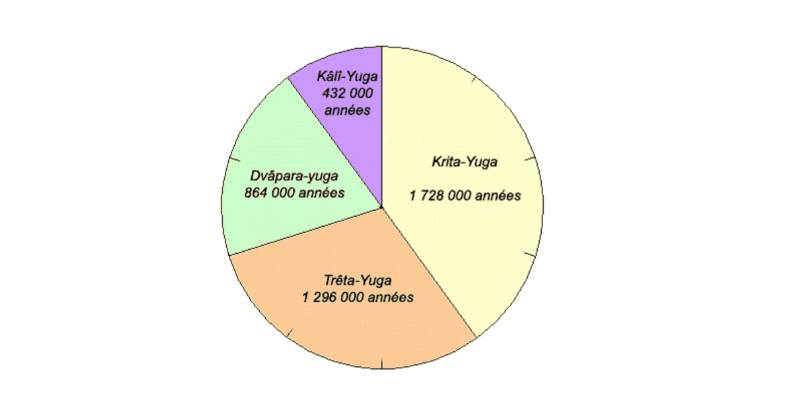
| Hindu Yuga Cycle | Duration (Human Years) | Duration (Divine Years) | Characteristics |
|---|---|---|---|
| Satya Yuga (Krita Yuga) | 1,728,000 years | 4,800 divine years | Age of Truth and Dharma (100%) |
| Treta Yuga | 1,296,000 years | 3,600 divine years | Decline of Dharma (75%) |
| Dwapara Yuga | 864,000 years | 2,400 divine years | Further decline of Dharma (50%) |
| Kali Yuga | 432,000 years | 1,200 divine years | Current age, Dharma at its lowest (25%) |
Total Duration of One Maha Yuga – Hindu Yuga Cycle
One complete cycle of the four Yugas, called a Maha Yuga, lasts 4,320,000 human years (12,000 divine years). After each Maha Yuga, a small dissolution (Pralaya) occurs before a new cycle begins.
Breakdown of a Maha Yuga:
- Satya Yuga = 1,728,000 years
- Treta Yuga = 1,296,000 years
- Dwapara Yuga = 864,000 years
- Kali Yuga = 432,000 years
- Total = 4,320,000 years
The Present Kali Yuga and Its Timeline
According to Hindu scriptures, Kali Yuga began in 3102 BCE, shortly after the departure of Lord Krishna from Earth. As of 2025 CE, we have completed 5,127 years of Kali Yuga.
- Remaining years of Kali Yuga: 426,873 years
- End of Kali Yuga: Approximately 428,898 CE
At the end of Kali Yuga, Lord Vishnu is expected to incarnate as Kalki, who will restore Dharma and usher in the next Satya Yuga.
Larger Time Cycles: Manvantara and Kalpa
Hindu time measurement extends beyond the Maha Yuga to even larger cycles:
- One Manvantara (Age of a Manu) = 71 Maha Yugas = 306,720,000 human years
- One Kalpa (Day of Brahma) = 14 Manvantaras + transition periods = 4.32 billion human years
- One Brahma Day & Night (Two Kalpas) = 8.64 billion years
- One Brahma Year = 360 Brahma Days = 3.1104 trillion years
- Brahma’s Lifespan = 100 Brahma years = 311.04 trillion years
Historical Perspective: How Long Ago Each Yuga Started
- Satya Yuga: 1,728,000 + 1,296,000 + 864,000 + 5,127 years ago = 3,893,127 BCE
- Treta Yuga: 1,296,000 + 864,000 + 5,127 years ago = 2,165,127 BCE
- Dwapara Yuga: 864,000 + 5,127 years ago = 869,127 BCE
- Kali Yuga: Started in 3102 BCE
The Dashavatara of Lord Vishnu
Lord Vishnu, the preserver of the universe, incarnates in different forms to restore Dharma. These ten principal incarnations (Dashavatara) occur in different Yugas:
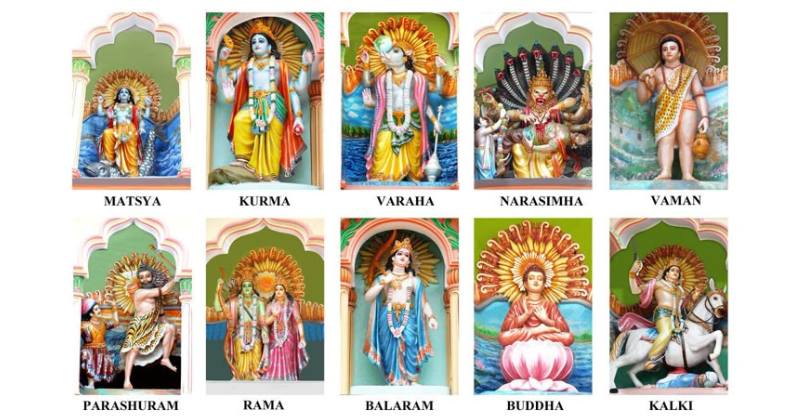
- Matsya (Fish) – Satya Yuga: Saved Manu and the Vedas from the great flood.
- Kurma (Tortoise) – Satya Yuga: Supported Mount Mandara during the churning of the ocean.
- Varaha (Boar) – Satya Yuga: Rescued Earth from the demon Hiranyaksha.
- Narasimha (Half-lion, Half-man) – Satya Yuga: Destroyed the tyrant Hiranyakashipu to protect Prahlada.
- Vamana (Dwarf) – Treta Yuga: Subdued King Bali and restored the balance of power.
- Parashurama (Warrior with Axe) – Treta Yuga: Destroyed corrupt Kshatriya rulers 21 times.
- Rama (Prince of Ayodhya) – Treta Yuga: Defeated Ravana and established Ram Rajya.
- Krishna (Divine Cowherd) – Dwapara Yuga: Guided the Pandavas and preached the Bhagavad Gita.
- Buddha (The Enlightened One) – Kali Yuga (in some traditions) Taught non-violence, compassion, and detachment, turning people away from ritualistic excess.
(Note: In some traditions, Balarama (Krishna’s Brother) is considered the 9th avatar instead of Buddha.) - Kalki (Future Warrior) – Kali Yuga (Yet to come): Will appear at the end of Kali Yuga to restore righteousness.
Also Read: 7 Oldest Religions in the World
The Yuga cycle represents the constant evolution and devolution of the universe, symbolizing the rise and fall of moral and ethical values in human civilization. While Kali Yuga is often seen as an age of darkness and corruption, it is also believed to be the time when spiritual enlightenment is most accessible through devotion (Bhakti), knowledge (Jnana), and righteous action (Karma).
As per Hindu beliefs, after the completion of the Kali Yuga, the cycle will restart with Satya Yuga, restoring purity and Dharma once again.
Disclaimer: We’ve based this article on Hindu scriptures and various online sources. It shares religious beliefs for informational purposes and doesn’t claim scientific accuracy. Different traditions may interpret these concepts differently.